
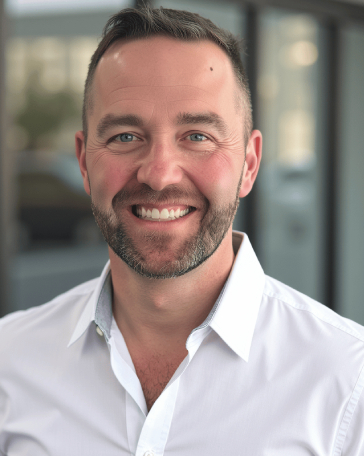
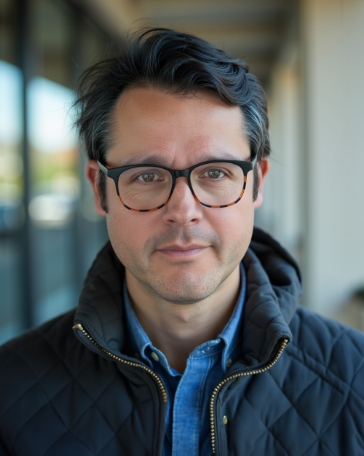

Michael Jones has spent more than twenty years inside the insurance world, moving from retail agency producer to risk management and non-traditional financing. He helped launch a next-generation insurance platform nationally, then supported the rebrand and North American expansion of an international software provider. That mix of agency, risk, technology, and global work turned him into a translator between worlds. He is the person who can take something complex, strip it down to what matters, and bring skeptics along with him.
Today he is co-owner of Combined Ratio Solutions, a company focused on a very unglamorous problem that happens to matter a lot. Instead of chasing the latest shiny AI idea, Combined Ratio focuses on the boring backbone: core systems. In Michael’s view, too many carriers are trying to build skyscrapers on cracked foundations. Traditional platforms are patched together, expensive to maintain, and slow to change. Combined Ratio offers a modern, open-source base so insurers can move money and attention into the truly innovative work that sits on top of those systems, from AI to new products to better customer experiences.
From lawnmowers to loss ratios
Michael grew up in a big entrepreneurial family. His parents ran their own businesses and made risk and responsibility feel normal, not scary. Being the fifth of six kids and, in his own words, “probably the most difficult one,” came with a side benefit. He had more freedom than his siblings, which fed an independent streak. For a while he imagined himself as a Navy pilot. Eventually he realized that taking orders was not the life he wanted. What appealed to him was owning the outcome and building something himself.
He started where a lot of teenagers do, cutting lawns. He worked full time during the day and chipped away at college at night. The degree took eight years. He jokes that with that timeline, you would expect him to be a doctor, but the real value was the exposure to people and entrepreneurial paths that felt within reach.
Insurance showed up almost by accident. While supporting a family-owned construction company, he ended up managing their back office, including insurance. That was where he saw both the mechanics and the human side. Insurance was not just paperwork. It was what allowed families and businesses to rebuild after serious loss. Like many people in the field, he says he did not choose insurance so much as insurance chose him, and he is glad it did.
When the perfect plan falls apart
Like most founders, Michael has a “we did everything right and it still blew up” story.
When he and his co-founder, Luke Magnan, first started out, they followed the textbook startup playbook. They built a polished business plan, pitched investors, and lined up what looked like a strong deal with a group in London. Plane tickets were booked. Contracts were drafted. It all looked set. Then, just before they were due to fly out, the investors backed out.
For a moment, it felt like the idea was dead. The funny twist is that their families took it harder than they did. Their wives were furious on their behalf and refused to let them retreat to safety. Instead, they pushed them to stop sulking, forget about the corporate backup plans, and go ahead on their own. That experience cemented one of Michael core beliefs: a single “no” cannot be allowed to decide your story.
Mentors in every direction
Michael points to a long list of people who shaped how he leads.
His parents taught him to take risks and stay with things when they get hard. Later, a CEO named Chris Baker gave him the chance to lead while quietly making sure he did not fall on his face. Baker would give him rope, let him run, and then use the inevitable stumbles as teaching moments instead of punishments.
One of his more unusual answers is his co-founder, Luke. People often imagine a mentor as the older, gray-haired expert. Michael sees it differently. For him, a real mentor is anyone who raises your game, calls you out when you are wrong, and stands beside you in a tough spot. By that definition, Luke has been a mentor as much as a partner, and Michael hopes the feeling is mutual.
The Five Cs of disruption
When Michael talks about what it takes to really shake up an industry, he keeps coming back to what he calls the Five Cs of disruption: Confidence, Conviction, Control, Collaboration, and Care.
- Confidence Nothing starts without this. Michael has met plenty of people with strong ideas who never actually make a move. Without the confidence to try, a brilliant concept is just a thought experiment. If you believe your idea can improve the industry you are in, you owe it to yourself to at least take the first step.
- Conviction Confidence helps you step onto the field. Conviction keeps you there when things get ugly. Michael points to a peer from his early days in insurance who had a very different vision for brokerage and customer service. That person stayed with the idea for decades. He did not become the biggest firm in terms of size, but he became one of the most respected precisely because he refused to abandon a model he believed in.
- Control For Michael, real disruption requires some control over your own destiny. He has seen founders give away too much equity too early and then end up on a short leash, forced into exits that did not line up with the actual market cycle of their industry. In slow-moving spaces like insurance, change can take years. If outside capital controls the timeline, good ideas can be cut off before they mature. Skin in the game keeps you fighting for the long view.
- Collaboration The lone-genius story sounds romantic. It is also not how real systems change gets done. Michael is clear that nobody disrupts a complex industry solo. At Combined Ratio, he and Luke come from different backgrounds and bring different strengths. That mix, plus a team that fills in gaps, is what allows them to build something substantial. For that to work, you have to check your ego, work with people who are strong where you are weak, and share the credit.
- Care The last C is the one that keeps the other four from turning into pure profit chasing. Michael believes you have to genuinely care about the industry you are touching and the people who will feel the impact of your product. He points to the Gates Foundation as an example outside insurance. They look for people who are deeply committed to their missions, not just their metrics. In his mind, the same standard applies in business. If you do not care, your disruption is unlikely to last.
Bring those Five Cs together and, in his view, you give yourself a real chance not only to change your corner of the world but to make that change stick.